
THE LIGHTHOUSE (2019)
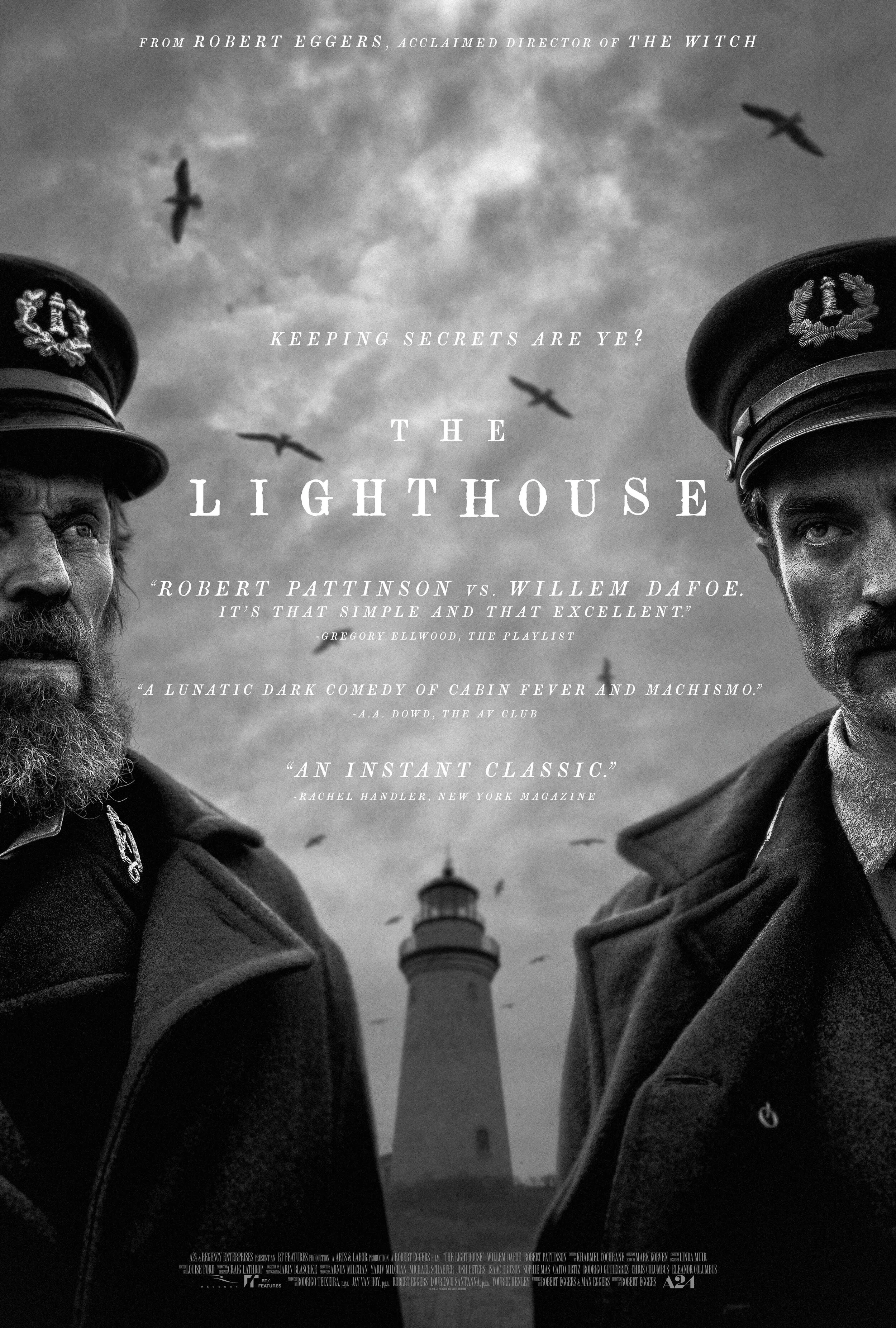
dir. Robert Eggers
From the first frames of its severe black-and-white images and ominous sounds, THE LIGHTHOUSE pulls you in to a sense of impending doom and doesn’t let up. That isn’t to say writer-director Robert Eggers’ sophomore film is humorless. In fact, it has far more humor than his first feature film, 2015’s THE WITCH, but that humor happens to be as pitch-black grim as the rest of the movie.
If you’ve seen THE WITCH, you’ll recognize that Eggers is interested in exploring many of the same themes here. Namely: seeing what happens to characters who are dangerously cut off from the rest of humanity and left to contend with one bad omen after another, often in the form of remorseless nature and menacing animals. Ultimately, both the characters and the audience are left to wonder what’s real and what’s isolation-induced psychosis.
This time, we have two lighthouse keepers (or “wickies,” to use the 19th century parlance of the film) who are delivered upon a small barren island off the coast of New England, where they set about a daily routine of backbreaking work. To be fair, the wickie who calls himself Winslow (Robert Pattinson) is the one doing all the pointless work, while Thomas (Willem Dafoe) barks orders by day and locks himself up in his lighthouse by night.
What exactly is going on in that lighthouse during the long and lonely nights? Is the isolation, drudgery and booze to explain for all the weird visions of mermaids and tentacles?
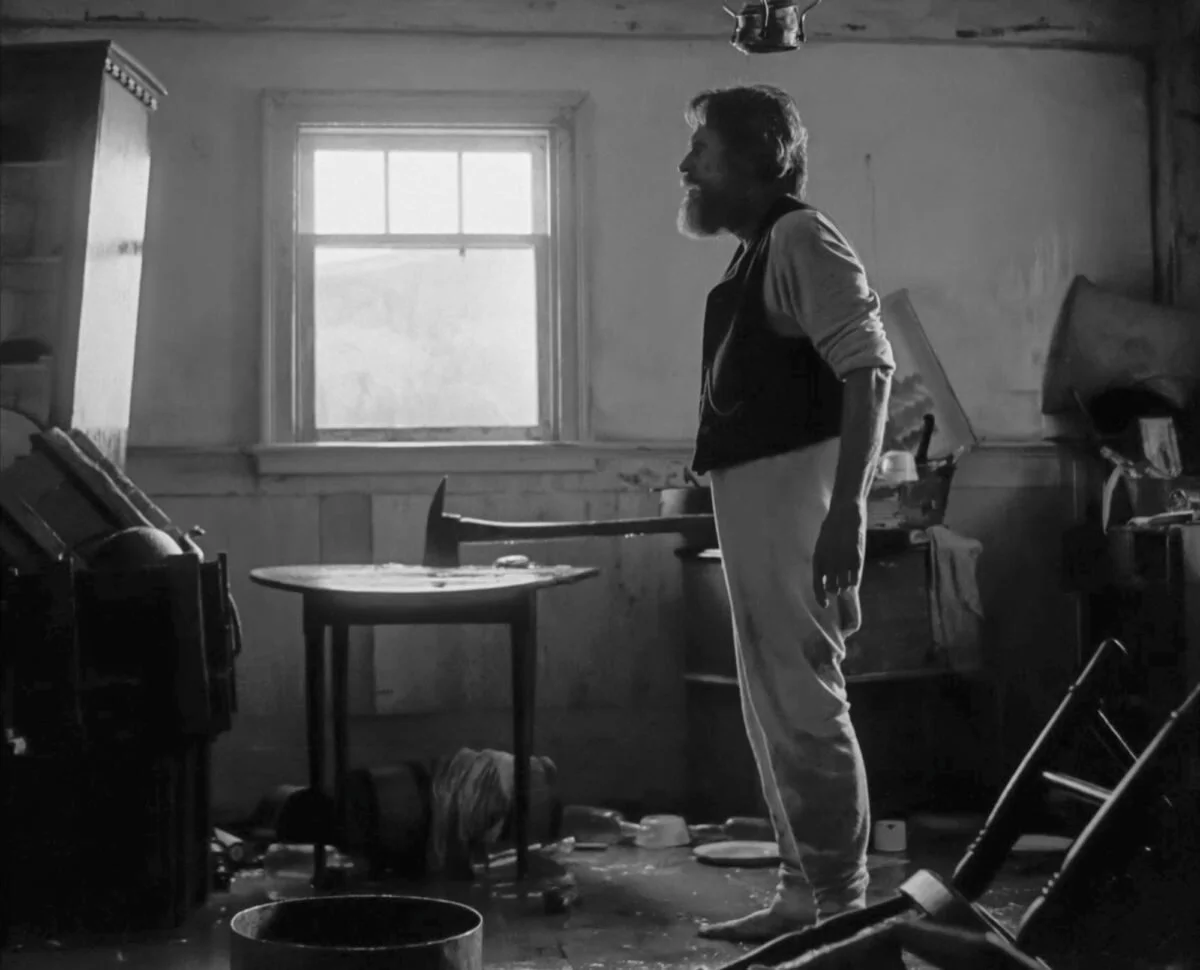
Eggers is also continuing his penchant for deep-dive period-specific research, which once again adds a convincing amount of verisimilitude to the proceedings. It seems one of the hallmarks of an Eggers film is going to be his use of historical records, such as letters and personal journals, as source material. And while the salty, antiquated language these two wickies use is what a lot people will focus on, every frame of the movie has an impressive amount of detail going on. While some may enjoy the fruitless debate of whether THE LIGHTHOUSE is better or worse than THE WITCH, I think it’s safe to say that this new one is a significant step up in terms of cinematic flair.
This time, Eggers has shot in black-and-white (with the blacks exuding an deep, inky darkness, and the whites offering a cold milkiness) and framed it all in the box-like academy ratio. This bold visual move has seemingly inspired Eggers to up his production design game. Every stitch of clothing, piece of furniture — anything that enters the camera’s eye — feels meticulously thought-out. So, while the story’s bleakness may begin to wear on the nerves, as the descent into murderous desperation and degradation continues unabated, the visuals never stop being anything less than awesome.
As for the story — in place of the Christian fervor so central to THE WITCH, we have the rules and folklore of the sea, where Neptune is god and Davy Jones’ Locker is hell. Essentially, what we are invited to witness is Winsow’s slow descent to a fate much worse than drowning. As the saying goes, the sea is a cruel mistress, and few movies have so vividly brought this sentiment to life as THE LIGHTHOUSE does.